 CarFault
Soft brake pedal .
A new soft or sinking pedal can indicate loss of hydraulic integrity. Keep the vehicle parked; do not road-test whether pumping helps.
This is symptom guidance, not a confirmed diagnosis. Inspection and vehicle-specific tests are needed before replacing parts.
Let’s follow the clues.
A few observations help separate the possibilities. Start with safety, then explore the symptoms you already know.
At your pace · no tools required
Understand the possibilities
Brake hydraulic leakage or air
+
Air, leakage or internal hydraulic faults can reduce pressure buildup and produce abnormal pedal travel.
A sinking/soft pedal or falling reservoir level needs stop-use assessment, not repeated pumping followed by a road test.
After confirmation
Keep the vehicle out of use; a professional checks leakage, master-cylinder/ABS circuits and the correct bleeding procedure.
Friction overheating or brake-fluid vapor
+
Repeated heavy braking or drag can overheat friction parts; heated moisture-contaminated fluid can form compressible vapor.
Heat with falling braking effectiveness or abnormal pedal feel is a stop-use condition even if symptoms later diminish.
After confirmation
Allow components to cool without touching them or pouring water; have friction, drag and hydraulic condition checked before reuse.
Pad fitting or anti-noise hardware
+
Incorrectly fitted clips, shims or pads may create noise, especially after recent brake work.
Onset immediately after brake work is useful context but does not prove an installation error.
After confirmation
Verify correct parts, orientation and hardware using the vehicle and brake manufacturer instructions.
Urgent signs
Has braking weakened, does the pedal sink, or is there a fluid leak, smoke or a red brake warning?
Stop driving as soon as you can safely do so. Switch the vehicle off and obtain professional roadside assistance. Do not restart to investigate.
Checks you can make safely
From outside a parked, cooled vehicle, note warning messages and visible leakage. Do not road-test reduced braking or touch hot wheels and discs.
Leave these to a professional
Do not reach into a running engine bay, work under an unsupported vehicle, bypass safety systems or open fuel, high-voltage or refrigerant circuits.
When to get help
Arrange professional inspection. Share the conditions, warning messages and your answers; ask the workshop to confirm the cause before repair.
This is symptom guidance, not a confirmed diagnosis. Inspection and vehicle-specific tests are needed before replacing parts.
A little more clarity
Can this confirm the failed part? +
This is symptom guidance, not a confirmed diagnosis. Inspection and vehicle-specific tests are needed before replacing parts.
Technical references
Sources explain general principles. Exact procedures and equipment depend on your vehicle. Editorial synthesis; no independent mechanic sign-off claimed.
Follow a related clue
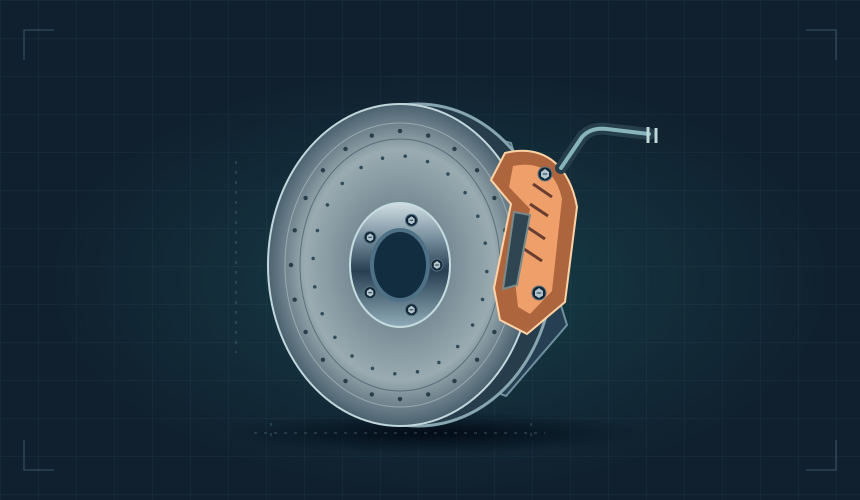 ↗
Suspected brake fluid leak
Suspected brake-fluid leakage is a stop-use condition. A low reservoir can also accompany pad wear, but that must not be used to dismiss visible leakage.
↗ Brakes overheating
Smoke, severe heat or reduced braking means stop safely. When cool and safe, prior conditions help separate repeated braking from brake drag.
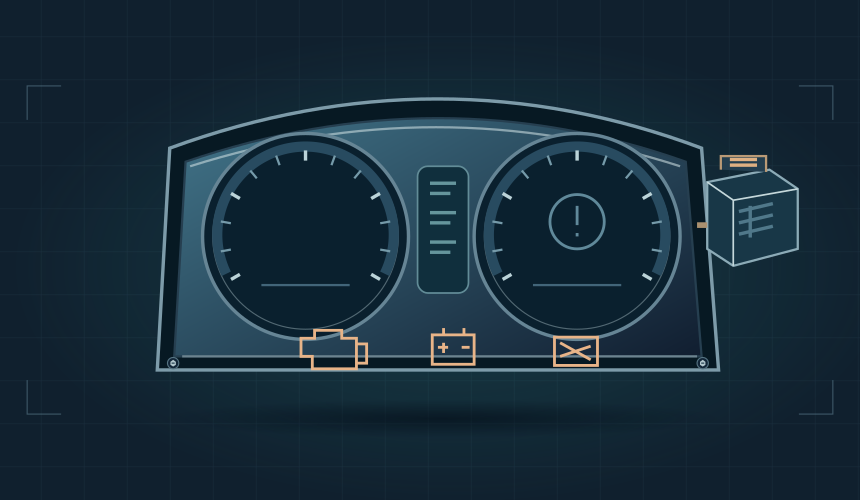 ↗
ABS warning light
An ABS warning can mean anti-lock assistance is unavailable. A red brake warning or reduced braking takes priority and requires a safe stop.