 CarFault
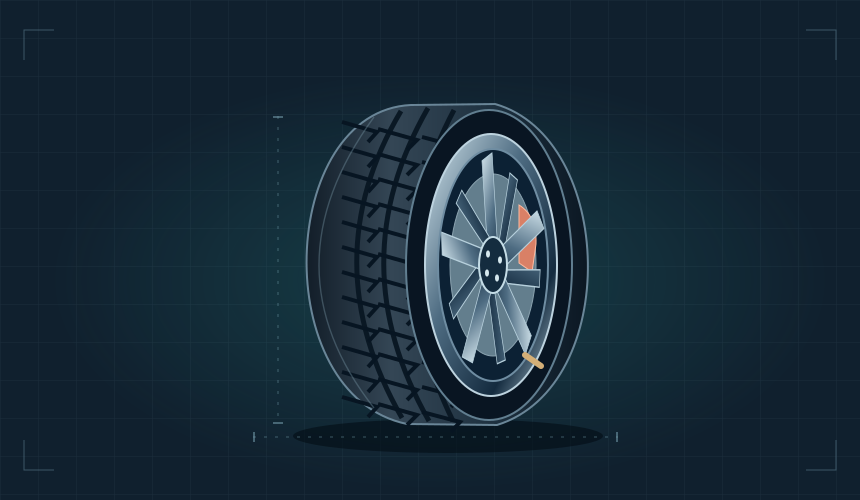
Tire repeatedly loses pressure .
Repeated loss in one tire needs leak testing. Compare measured cold pressures rather than relying only on how the sidewall looks.
This is symptom guidance, not a confirmed diagnosis. Inspection and vehicle-specific tests are needed before replacing parts.
Let’s follow the clues.
A few observations help separate the possibilities. Start with safety, then explore the symptoms you already know.
At your pace · no tools required
Understand the possibilities
Puncture, valve or bead leak
+
Repeated pressure loss in one tire can originate at the tread, valve, bead seat or wheel. No visible nail does not exclude a leak.
A single tire losing more than the others in comparable conditions supports leak testing rather than just resetting TPMS.
After confirmation
Have the tire and wheel leak-tested and assess repairability under the tire manufacturer rules.
Tire structural or wheel damage
+
A bulge, exposed cord, damaged wheel or sudden deformation can compromise tire integrity and control.
An outward bulge differs from a normal shallow sidewall indentation; uncertain damage needs specialist assessment before use.
After confirmation
Stop use of a damaged tire/wheel and obtain safe recovery or manufacturer-approved spare assistance. Sidewall bulges are not repaired by balancing.
Unequal pressure or tire condition
+
Pressure differences and tire condition can affect straight-line tracking. Tire construction and damage also matter.
Compare cold pressures with the placard; a persistent pull after correction needs further inspection.
After confirmation
Correct pressure to the placard, assess tire integrity and professionally investigate a persistent pull.
Urgent signs
Is control difficult, is the car suddenly unstable, or is a wheel or tire visibly damaged?
Stop driving as soon as you can safely do so. Switch the vehicle off and obtain professional roadside assistance. Do not restart to investigate.
Checks you can make safely
When safely parked, check cold tire pressures against the vehicle placard and inspect visible tread and sidewalls without going under the car.
Leave these to a professional
Do not reach into a running engine bay, work under an unsupported vehicle, bypass safety systems or open fuel, high-voltage or refrigerant circuits.
When to get help
Arrange professional inspection. Share the conditions, warning messages and your answers; ask the workshop to confirm the cause before repair.
This is symptom guidance, not a confirmed diagnosis. Inspection and vehicle-specific tests are needed before replacing parts.
A little more clarity
Can this confirm the failed part? +
This is symptom guidance, not a confirmed diagnosis. Inspection and vehicle-specific tests are needed before replacing parts.
Technical references
Sources explain general principles. Exact procedures and equipment depend on your vehicle. Editorial synthesis; no independent mechanic sign-off claimed.
Follow a related clue
 ↗
Tire pressure warning
Measure cold pressure before resetting a warning. Low inflation, a leak and a TPMS malfunction require different next steps.
↗ Tire sidewall bulge
An outward sidewall bulge is a stop-use sign. It is different from a normal shallow inward indentation, and uncertain damage needs a tire specialist.
↗ Wheel wobble
Visible wobble or severe vibration needs prompt professional assessment. Tire integrity, wheel runout and hub condition must be checked before balancing alone.