 CarFault
Steering wheel hard to turn .
Identify assistance type and warning behavior. Mechanical binding, tire pressure and assistance loss need different professional checks.
This is symptom guidance, not a confirmed diagnosis. Inspection and vehicle-specific tests are needed before replacing parts.
Let’s follow the clues.
A few observations help separate the possibilities. Start with safety, then explore the symptoms you already know.
At your pace · no tools required
Understand the possibilities
Steering assistance supply or pump
+
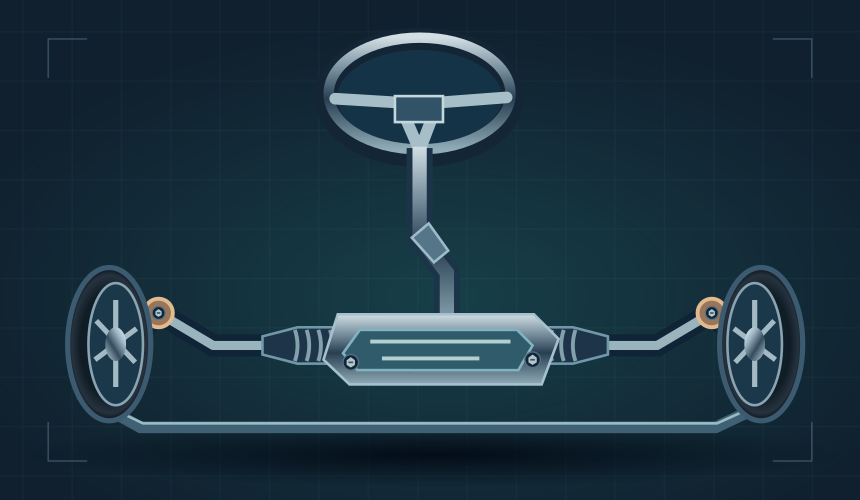
Hydraulic and electric assistance use different hardware. Low hydraulic fluid, a pump fault or electrical supply/control fault may increase effort or noise where relevant.
A steering warning and multiple electrical symptoms suggest a different check path from fluid leakage in a hydraulic system.
After confirmation
Identify the installed steering system and test its supply, control and hydraulic condition where applicable.
Steering linkage or joint condition
+
Worn, loose or binding steering joints can cause play, knocking or inconsistent steering effort.
Steering movement before wheel response, knocks during turning or instability need a mechanical inspection.
After confirmation
Have linkage, joints, rack mountings and wheel suspension inspected; do not attempt to adjust out safety-critical play yourself.
Unequal pressure or tire condition
+
Pressure differences and tire condition can affect straight-line tracking. Tire construction and damage also matter.
Compare cold pressures with the placard; a persistent pull after correction needs further inspection.
After confirmation
Correct pressure to the placard, assess tire integrity and professionally investigate a persistent pull.
Urgent signs
Is control difficult, is the car suddenly unstable, or is a wheel or tire visibly damaged?
Stop driving as soon as you can safely do so. Switch the vehicle off and obtain professional roadside assistance. Do not restart to investigate.
Checks you can make safely
When safely parked, check cold tire pressures against the vehicle placard and inspect visible tread and sidewalls without going under the car.
Leave these to a professional
Do not reach into a running engine bay, work under an unsupported vehicle, bypass safety systems or open fuel, high-voltage or refrigerant circuits.
When to get help
Arrange professional inspection. Share the conditions, warning messages and your answers; ask the workshop to confirm the cause before repair.
This is symptom guidance, not a confirmed diagnosis. Inspection and vehicle-specific tests are needed before replacing parts.
A little more clarity
Can this confirm the failed part? +
This is symptom guidance, not a confirmed diagnosis. Inspection and vehicle-specific tests are needed before replacing parts.
Technical references
Sources explain general principles. Exact procedures and equipment depend on your vehicle. Editorial synthesis; no independent mechanic sign-off claimed.
Follow a related clue
 ↗
Power steering noise
Steering-related noise depends on whether assistance is hydraulic or electric. Do not hold the wheel against its stop to recreate the noise.
↗ Steering play
A delay between steering input and wheel response needs a mechanical inspection. Never try to remove play by tightening a rack adjuster yourself.
↗ Car pulls to one side
Separate a constant pull from one that appears during braking. Tires, alignment and brakes each need different evidence.