 CarFault
Headlights flicker .
Separate one lamp’s fault from a shared power or charging disturbance. Do not drive at night with unreliable required lighting.
This is symptom guidance, not a confirmed diagnosis. Inspection and vehicle-specific tests are needed before replacing parts.
Let’s follow the clues.
A few observations help separate the possibilities. Start with safety, then explore the symptoms you already know.
At your pace · no tools required
Understand the possibilities
Headlamp bulb, driver or unit
+
A single dark or flickering light may involve its bulb, LED driver or lamp assembly. Modern high-voltage lamp units are not suitable for live owner probing.
One affected side with normal other electrical functions differs from both sides changing with engine speed.
After confirmation
Check lamp type, power/control and the confirmed faulty unit professionally; follow the manual for any owner-replaceable bulb.
Charging system or connection fault
+
Insufficient charging or resistance in cables can leave the battery undercharged; a battery lamp does not prove an alternator alone is faulty.
A charge lamp while running or lights varying with engine speed supports a charging-system check.
After confirmation
Test battery, charging output, voltage drops and drive condition with the correct smart-charging procedure.
Wiring, connector or control-module signal
+
An intermittent connection or module signal can interrupt a function even when the mechanical component is intact.
Intermittency, several affected functions or onset after repair support circuit checks before a component is condemned.
After confirmation
Use vehicle-specific diagrams, fault data and supply/ground tests to confirm the affected circuit.
Urgent signs
Is there smoke, a burning smell, a hot or damaged battery, or exposed wiring?
Stop driving as soon as you can safely do so. Switch the vehicle off and obtain professional roadside assistance. Do not restart to investigate.
Checks you can make safely
With the vehicle off, look for obvious case damage or corrosion without touching terminals. Do not disconnect the battery with the engine running.
Leave these to a professional
Do not reach into a running engine bay, work under an unsupported vehicle, bypass safety systems or open fuel, high-voltage or refrigerant circuits.
When to get help
Arrange professional inspection. Share the conditions, warning messages and your answers; ask the workshop to confirm the cause before repair.
This is symptom guidance, not a confirmed diagnosis. Inspection and vehicle-specific tests are needed before replacing parts.
A little more clarity
Can this confirm the failed part? +
This is symptom guidance, not a confirmed diagnosis. Inspection and vehicle-specific tests are needed before replacing parts.
Technical references
Sources explain general principles. Exact procedures and equipment depend on your vehicle. Editorial synthesis; no independent mechanic sign-off claimed.
Follow a related clue
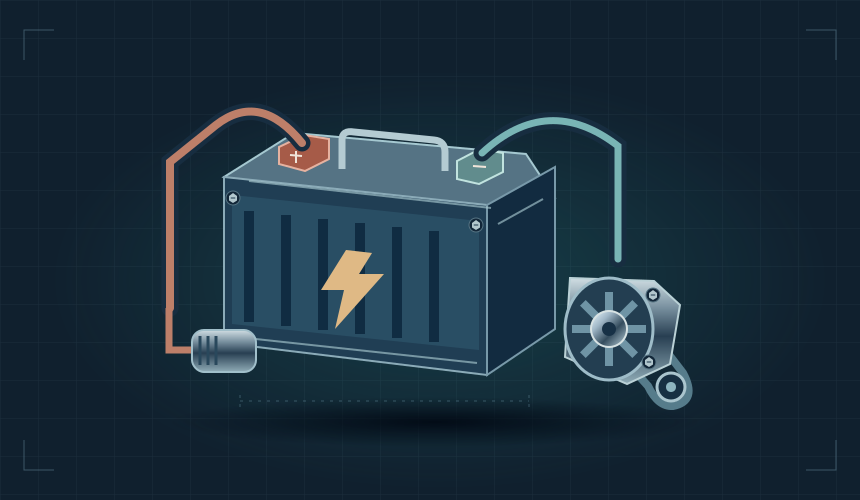 ↗
Alternator not charging
A charging complaint may involve the battery, wiring or belt as well as the alternator. Smart charging prevents a single voltage value from being universal proof.
 ↗
Headlights not working
Which side and beam have failed matters. Lamp units, switches and supply circuits require different checks; exact fuse and bulb types come from the manual.
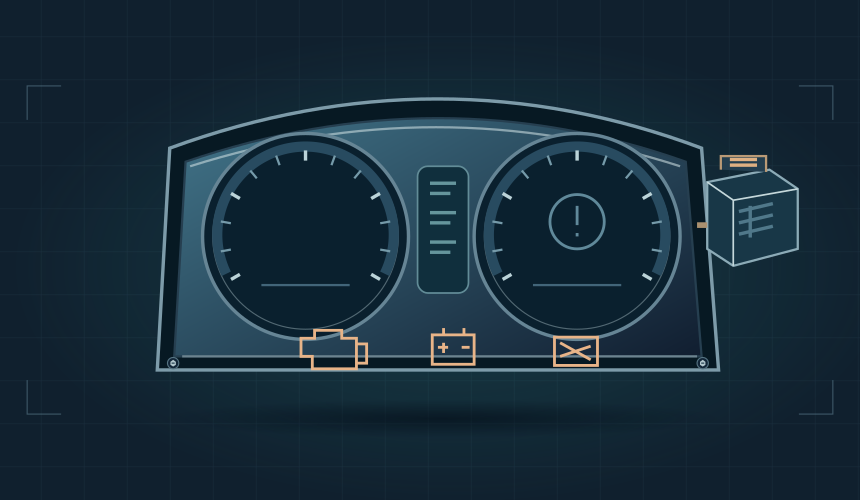 ↗
Battery charging warning light
A charging lamp while running concerns the charging system, not simply battery replacement. If drive or cooling assistance is affected, stop safely.